


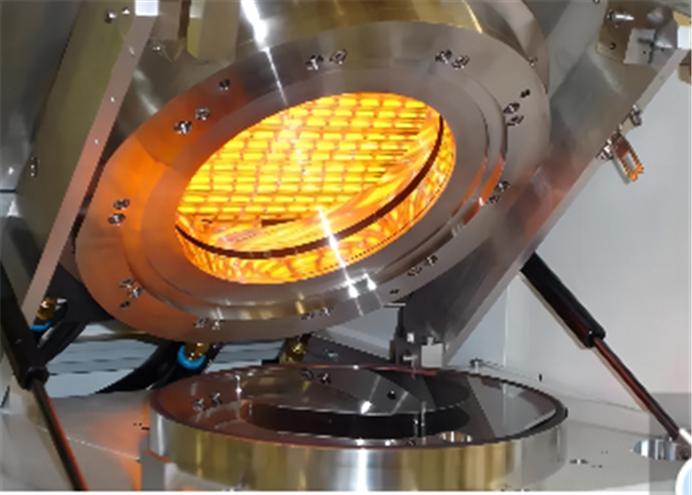
Making Semiconductor Drying Actually Green
When you’re working with semiconductor wafers, you’re playing a high-stakes game with heat. You need the solvents and moisture gone, but if you mess up the thermal management, you’ve just ruined a batch of delicate silicon. For a long time, we relied on old resistive heating systems. They’re clunky. Now, we’re moving toward digital infrared (IR) dryer controllers. Instead of trying to heat up the entire air volume of an oven—which is basically like heating the whole house just to warm up a slice of pizza—these controllers aim the heat directly at the substrate. Stop wasting power on thin air Old systems are notorious for “overshooting.” They get too hot, then cool down, then spike again. It’s a messy cycle that eats up way too many kWh per wafer. Digital IR controllers fix this with PID loops. In plain English? They listen to real-time sensors and adjust the power on the fly. You hit your target temperature and you stay there. But the real magic happens with pulsed IR. The controller basically “chops” the power, maintaining the heat without drawing a full load every single second. It’s a much leaner way to work. The hardware reality check Now, if you’re trying to build a “Green Factory,” you can’t just plug these in and forget about them. You have to look at your electrical footprint. High-wattage IR lamps are great because they’re fast, but they put a massive strain on your power supplies. And here is where people usually trip up: the cooling. If you push for maximum throughput, your fans have to be up to the task. If the power electronics overheat, the system throttles. Then your uptime tanks, and suddenly your “efficient” system is sitting idle. Cutting the carbon bloat If we’re ever going to hit carbon-neutral targets in a fab, we have to lower the energy floor. One of the biggest wins here is “instant-on” heating. Think about how much energy is wasted keeping a system idling at high temperatures during a shift change or a quick maintenance check. It’s a huge amount of ghost power. With digital controllers, you just power down. When you’re ready to go, you’re back to operating temperature in seconds. No more idling. No more bloated carbon reports. Just heat when you actually need it.