


Stop Your Infrared Lamps From Killing Your Wafers
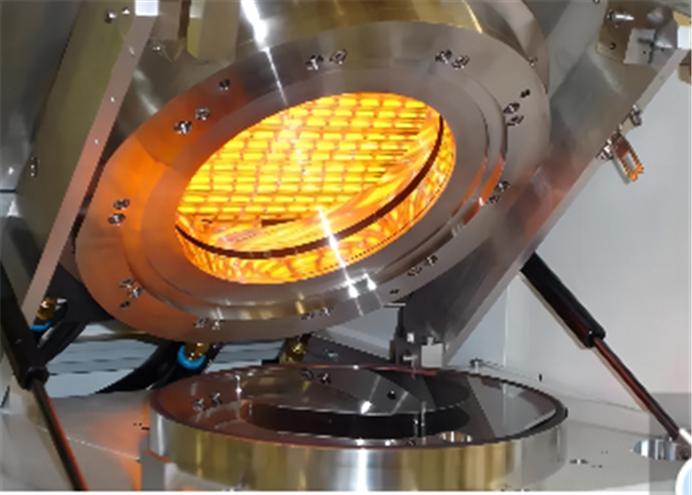
Running high-load production cycles is brutal on infrared heating lamps. They take a beating. When a lamp finally gives up—or worse, bursts inside the heating chamber—it’s a nightmare. You end up with quartz shards and filament debris everywhere. That doesn’t just ruin the wafer you’re working on; it kills your entire day because you have to shut down the whole line just to clean up the mess. Dealing with the “Pop” The real enemy here is thermal shock. If the quartz envelope has a tiny impurity or the walls aren’t perfectly even, the heat makes the glass expand unevenly. That’s how you get a crack. We stick to high-purity synthetic quartz. It expands uniformly, which means it can handle rapid cycling without snapping. But let’s be honest: things still break. That’s why we put a protective containment sleeve around the lamp. Think of it as a safety net. If the inner lamp bursts, the debris stays trapped inside the sleeve. Your silicon stays clean, and you don’t have to panic. Building for the Long Haul To keep things stable, we use a halogen-cycle filament. This stops tungsten from evaporating and clouding up the inner walls, so your heat output stays steady for thousands of hours. We also use reinforced end-caps. If gas leaks out, the lamp burns out early—plain and simple. One quick tip: be careful with your power supply. It’s tempting to over-volt a lamp to get a faster ramp-up time, but that’s a gamble. It wears out the filament way faster and makes a catastrophic burst much more likely. The Trade-off Here is the catch. Adding that protective sleeve does block a tiny bit of the infrared transmission. You lose a small amount of direct heat. It’s not a dealbreaker, but you’ll need to tweak a few things. You might want to bump up the lamp wattage or move the heater a bit closer to the wafer. Just make sure your cooling fans can handle the extra heat in the housing, or you risk warping the frame.